

Advisory
Airport Taxi Scams: How to Spot and Avoid Them
Rigged meters, arrivals-hall touts, long-hauling, fake taxi marshals and rideshare impostors, by scam type, plus the simplest defence: pre-book.
Published June 15, 2026 · AI-assisted editorial
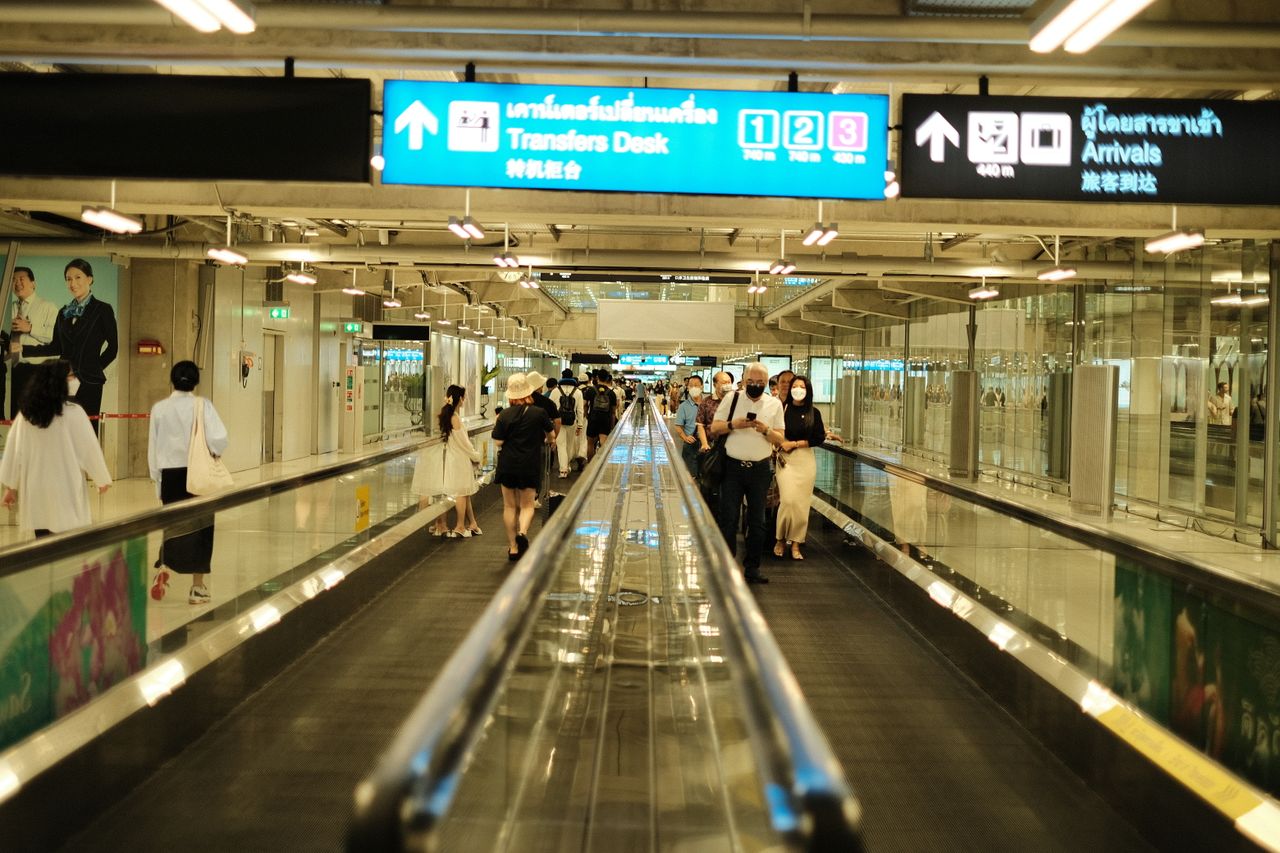
Airport taxi scams follow the same handful of scripts worldwide: a "broken" meter, a longer route than needed, an unlicensed driver who waves you over before you reach the official rank, a fake "official taxi" marshal, a sleight-of-hand with your change, or a stranger calling your name at the rideshare pickup. Knowing each pattern is most of the defence.
The good news is that none of these scripts survive contact with a prepared traveller. Scams at airports rely on three things working in the scammer's favour: you are tired, you do not know the local fare, and you feel pressure to decide in seconds with luggage in hand. Remove any one of those and the pitch falls apart. Below is each common scam by type, the red flag that gives it away, and the move that defuses it. At the end is the simplest defence of all, which is to take the decision out of the arrivals hall entirely.
The "broken meter" and the rigged meter
This is the most common airport-taxi scam on the planet. A driver either claims the meter is broken and offers a flat rate two to three times the going price, or runs a meter that has been tampered with to tick over far faster than distance and time warrant. The flat-rate version sounds convenient when you are jet-lagged; the rigged-meter version is harder to spot until the number climbs unnaturally fast.
The tell is simple. A licensed metered taxi has a working meter, and a driver who refuses to use it is choosing not to. If the fare appears to jump in a single increment, or the meter is covered, switched off, or "just not working today," you are being set up.
| Scam | Red flag | How to avoid it |
|---|---|---|
| Broken-meter flat rate | Driver refuses the meter, quotes a round-number flat fare | Insist on the meter before you load bags; decline and walk to the next car if refused |
| Rigged fast meter | Fare jumps in large steps, meter ticks faster than traffic moves | Photograph the meter and plate at the start; query any jump immediately |
| Surprise surcharges | "Airport tax," "luggage fee," "night fee" appear only at the end | Ask for the full price including all fees before departing; agree it out loud |
Long-hauling: the scenic detour you did not ask for
Long-hauling means taking a deliberately roundabout route to inflate a metered fare, or to justify a high flat rate. It is most common on airport-to-city-centre runs, where a visitor has no idea whether the trip should take fifteen minutes or fifty. Some drivers will also invent "traffic," "a closed road," or "a festival" to explain the loop.
You do not need local knowledge to catch this any more, because your phone has it. Open a maps app, set your destination before you get in, and watch the route. A driver who sees you tracking is far less likely to wander, and if the car drifts well off the suggested line you can ask about it on the spot.
| Scam | Red flag | How to avoid it |
|---|---|---|
| Scenic-route padding | Route wanders away from the obvious direct line | Track the trip on a maps app; mention the expected route when you board |
| Invented obstacles | Unverifiable "road closed" or "bad traffic" detours | Cross-check live traffic in your maps app before agreeing to a detour |
| Meter-and-detour combo | Slow driving plus a longer route on a running meter | Agree an approximate fare range up front so a padded total stands out |
Unlicensed touts in the arrivals hall
As you clear baggage claim you will often be approached by friendly, persistent people offering "taxi, taxi." These are touts, and the ride they sell is usually an unlicensed car with no meter, no fare regulation, no commercial insurance, and no accountability if something goes wrong. The approach is the scam: legitimate taxis wait in a marked rank and do not need to chase arriving passengers.
The fix is to keep walking. Follow the airport's signage to the official taxi rank, the licensed ground-transport desk, or your pre-arranged driver, and decline every in-hall offer politely but firmly. Anyone working the crowd inside the terminal, rather than waiting at the official stand, is a red flag by definition.
| Scam | Red flag | How to avoid it |
|---|---|---|
| Arrivals-hall tout | Someone pitches you a ride inside the terminal | Ignore in-hall offers; follow signage to the official rank or your booked driver |
| Unlicensed "taxi" | No company markings, no visible licence, no meter | Use only marked, licensed vehicles from the official queue |
| Bag-grab pressure | A "helper" takes your luggage toward an unmarked car | Keep control of your bags; do not follow anyone away from the official area |
Fake "official taxi" marshals and uniform impersonation
A more sophisticated version of the tout dresses the part. Scammers print lanyards, copy a logo onto a clipboard or sign, or pose as an "official taxi marshal" or "dispatcher" directing arrivals to a particular car. Because they look semi-official and confident, tired travellers follow without questioning. The car they steer you to is the overpriced or unlicensed one they profit from.
A genuine airport taxi system does not rely on someone intercepting you in the concourse. Real dispatchers work at the marked rank itself, not roaming the arrivals area. If a "marshal" is steering people away from the posted queue, or cannot point you to clear official signage, treat the uniform as a costume.
| Scam | Red flag | How to avoid it |
|---|---|---|
| Fake taxi marshal | "Official" guide intercepts you before the rank | Walk to the signposted rank yourself; ignore anyone redirecting you off it |
| Copied branding | Hand-made sign or lanyard mimicking a known company | Verify against permanent airport signage, not a person's printout |
| Hotel-redirection ploy | Driver claims your hotel is "closed" or "overbooked," offers another | Call your hotel directly to confirm; never accept an unrequested switch |
Currency and change tricks
Two sleight-of-hand scams target the moment you pay. In the short-change trick, the driver hands back too little and counts on you being distracted by luggage and a busy kerb. In the note-swap trick, the driver takes a large note, palms it, and produces a smaller or "counterfeit" one, insisting you paid less or paid with a fake and must pay again. Unfamiliar currency makes both far easier to pull off.
Preparation beats both. Carry small denominations for your arrival day so you rarely need change, learn what the local notes look like before you land, and count what you hand over and what you get back before you step away from the car. Paying close to the exact fare removes the entire opening.
| Scam | Red flag | How to avoid it |
|---|---|---|
| Short-changing | Change handed back hurriedly while you are distracted | Count change before you leave; state the note you paid with out loud |
| Note swap | Driver claims your note was smaller or "fake" after taking it | Pay with small notes; note a distinguishing mark on any large bill first |
| "No change" stall | Driver "cannot break" your note and keeps it | Carry exact-ish small notes; do not hand over large bills you cannot afford to lose |
Rideshare pickup-zone confusion and driver impersonation
Ride-hailing apps solve the meter and fare problems, but the airport pickup zone creates a new one. In crowded designated areas, an impostor may call out a common name, or simply ask "are you my ride," hoping a tired passenger climbs into the wrong car. At best it is a cash overcharge; at worst you are in a stranger's vehicle that the app never matched to you.
The app gives you everything you need to verify, so use it. Match the driver's name, the exact car make, model, colour, and the full licence plate before opening a door, and let the driver confirm your name rather than offering it. If any detail is off, or someone is freelancing rides at the kerb, do not get in and request again from where you are.
| Scam | Red flag | How to avoid it |
|---|---|---|
| Driver impersonation | A stranger calls a name or asks "are you my ride?" | Make the driver confirm your name; never volunteer it first |
| Plate mismatch | Car, colour, or plate does not match the app | Verify name, car, and full plate against the app before boarding |
| Kerbside freelancer | Someone offers a cash ride outside the app entirely | Decline cash-only offers; book and pay only inside the official app |
The simplest defence: decide before you land
Every scam above shares one weakness. It needs you to make a snap decision in the arrivals hall, where you are tired, unsure of the fare, and surrounded by people who do business by creating urgency. A pre-booked private transfer with a meet and greet removes that whole moment. Your driver is waiting with a name board, the price is fixed and agreed before you travel, there is no meter to argue about, no route to pad, no change to count, and no question about whether the car is legitimate. You walk past the entire arrivals-hall gauntlet to a driver who is already yours.
That is the model Aurum is built around for travellers worldwide. You can search a private transfer for your route in advance, and for the smoothest landing our VIP arrival service adds a personal meet and greet so a vetted driver is holding your name the moment you clear the doors. If you are still in planning mode, our trip preparation guide walks through what to line up before you fly.
Confidence at the airport is mostly preparation. Know the scripts, keep control of your bags and your decisions, and where you can, arrange the ride before wheels-down so the only person approaching you is the one you booked.
Frequently asked questions
What is the most common airport taxi scam? The "broken meter" is the most widespread. A driver claims the meter does not work and offers a flat rate well above the real fare, or runs a meter that has been rigged to climb too fast. Insisting on a working meter, or pre-booking a fixed-price transfer, defeats it.
How do I know if an airport taxi is legitimate? A legitimate taxi waits in the marked official rank, carries clear company markings and a visible licence, and uses a working meter or a published fixed fare. Anyone who approaches you inside the terminal, lacks markings, or refuses the meter should be declined.
Are ride-hailing apps safe from the airport? The app pricing and matching remove the meter and fare disputes, but the pickup zone invites impersonation. Always confirm the driver's name, the car make and model, and the full licence plate against the app before getting in, and let the driver say your name first.
How can I avoid being overcharged or short-changed? Carry small denominations for arrival day, learn what local notes look like before you land, agree the full fare including any fees up front, and count your change before stepping away from the car. Paying close to the exact amount removes most of the opportunity.
What should I do if a driver insists my hotel is closed or overbooked? Treat it as a redirection scam designed to send you to a place that pays the driver a commission. Do not accept an unrequested change. Call your hotel directly to confirm, and ask to be taken only to the address you booked.
Does pre-booking a private transfer really prevent these scams? Largely, yes. A pre-booked private transfer with a meet and greet fixes the price in advance, sends a vetted driver to meet you with a name board, and skips the arrivals-hall approaches entirely. There is no meter to dispute, no route to pad, and no doubt about whether the car is legitimate.