

How to
Airport Codes Explained: What IATA Codes Mean (2026)
What airport codes like LHR, ORD, and MBJ actually mean, the difference between IATA and ICAO, and how to decode any three-letter code.
Published June 19, 2026 · AI-assisted editorial
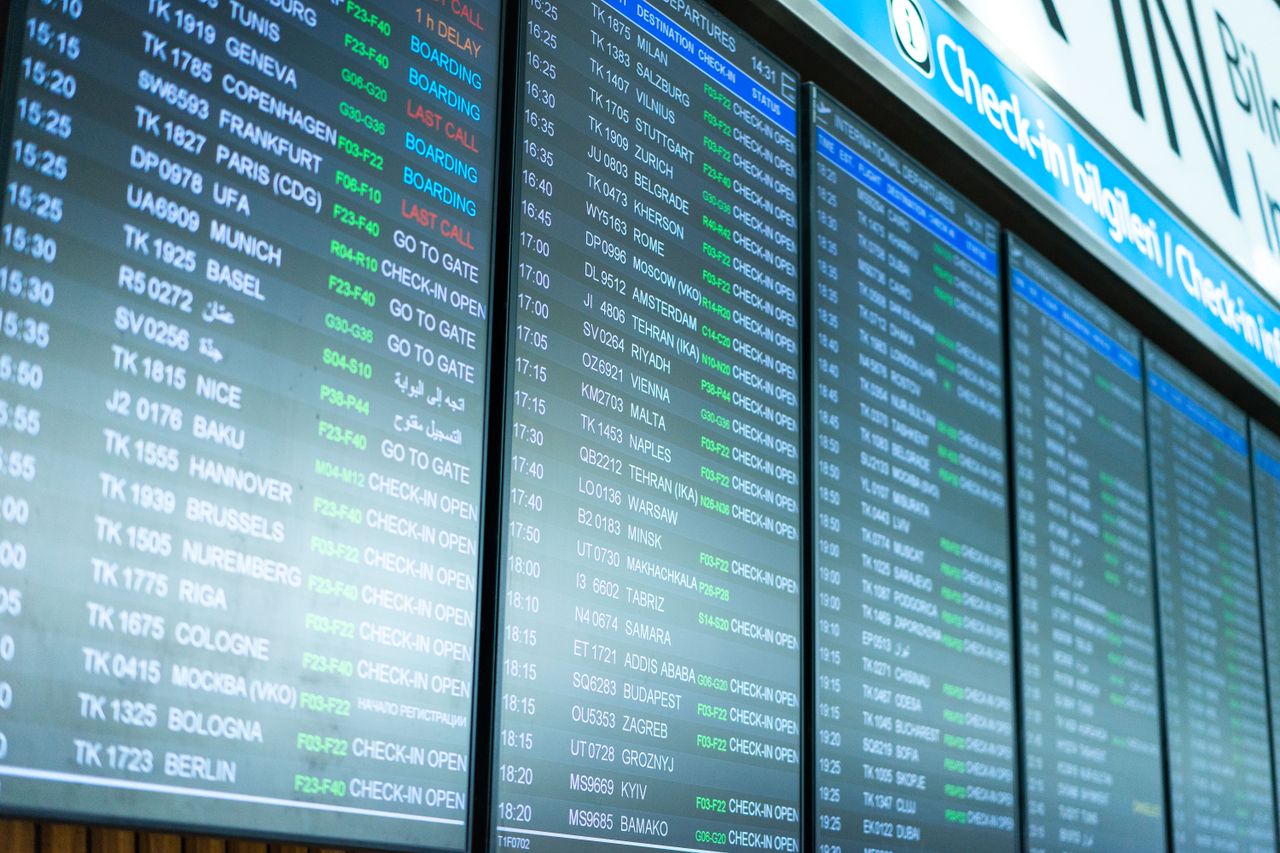
An airport code is the short identifier that names an airport on tickets, bag tags, and departure boards. The three-letter version (IATA) — like LHR, JFK, or MBJ — is the one travelers see, while a four-letter ICAO code is used by pilots and air traffic control. Here is how they work and how to decode any of them.
The two code systems: IATA and ICAO
Every commercial airport carries two official codes, and they serve different audiences.
The IATA code is the three-letter tag assigned by the International Air Transport Association. It is the one printed on your boarding pass, your luggage sticker, and the airline booking screen — LHR for London Heathrow, JFK for New York, LAX for Los Angeles, MBJ for Montego Bay. IATA codes are built for humans and commerce.
The ICAO code is a four-letter identifier from the International Civil Aviation Organization, used in flight plans, air traffic control, and aviation weather reports. ICAO codes encode geography: the first letter or two marks the region. For most United States airports the ICAO code is simply the IATA code with a "K" in front — LAX becomes KLAX, JFK becomes KJFK, ORD becomes KORD. In much of Europe the prefix is "E" or "L"; Heathrow's ICAO code is EGLL, which looks nothing like LHR.
As a traveler you will almost never need the ICAO code. It is worth knowing it exists so that a flight-tracking app showing "KMCO" instead of "MCO" does not throw you.
Why some codes look nothing like the city
Plenty of codes map cleanly to their city — ATL for Atlanta, MIA for Miami, SYD for Sydney. Others are baffling until you know the backstory, and the backstory is almost always history rather than logic.
- ORD — Chicago O'Hare. The site was once an aircraft factory beside a hamlet called Orchard Place, and the field was named Orchard Field — hence ORD. It was only renamed O'Hare in 1949, after war hero Edward "Butch" O'Hare. The code never caught up.
- MCO — Orlando. It does not stand for "Mickey Mouse Country," despite the theme parks nearby. The airport sits on the former McCoy Air Force Base, and MCO preserves the McCoy name.
- LAX — Los Angeles. Before the 1930s many US airports used two letters. When the system expanded to three, Los Angeles padded "LA" with an X. Several West Coast codes ending in X share that origin, which is why the X rarely means anything on its own.
The lesson: a code is a frozen snapshot of whatever the airfield was called when the identifier was assigned. Cities rename airports; the three letters usually stay put.
Why Canadian codes all start with Y
Travelers heading to Canada notice it fast: YYZ for Toronto, YUL for Montreal, YVR for Vancouver, YYC for Calgary. The pattern is not a coincidence.
In the 1930s, before the modern three-letter system, what mattered for a pilot was whether an airfield had a weather and radio station on site. If it did, planners put a "Y" — for "yes" — in front of the existing two-letter radio call sign. Those two trailing letters often came from the old transcontinental railway Morse identifiers for the area. Toronto's "YZ" was the Morse code for nearby Malton; Montreal's "UL" came from a local beacon. When the three-letter IATA system arrived in the 1940s, most Canadian airports already had Y-codes, so they were left alone.
A few codes that catch travelers out
Some codes are not wrong so much as easy to confuse — especially metropolitan-area codes that cover more than one airport.
| Code | What it actually is | Watch out for |
|---|---|---|
| LON | All of London (metro code, not an airport) | LHR, LGW, STN, LTN, LCY, SEN are the real airports |
| NYC | All of New York (metro code) | JFK, LGA, EWR are the airports you fly into |
| MBJ | Sangster International, Montego Bay | The main gateway for Jamaica's north coast |
| KIN | Norman Manley International, Kingston | Jamaica's capital — not the resort coast |
| LCA vs LCY | Larnaca, Cyprus vs London City | One letter apart, very different places |
Booking the metro code (LON, NYC) can return fares from any airport in that cluster — handy for flexibility, but check which physical airport your final ticket lists before you arrange ground transport.
How to look up any airport code
You do not need to memorize them. To decode a code you do not recognize:
- Type the three letters into any flight search or map — the airport's full name comes up instantly.
- On a booking, the code always sits next to the city and country, so cross-check the country if a code looks ambiguous.
- When you browse a destination on Aurum, the gateway airport and its code are listed on the page, so you can confirm you are routing to the right field before you book anything.
The one moment codes genuinely matter is when a city has several airports far apart. Landing at the wrong one can mean a long, much pricier transfer.
What the code means for your arrival
Once you know your real arrival code, the rest of the trip gets easier to plan. Drive times, transfer routes, and lounge availability are all tied to the specific airport, not the city. Before you fly, confirm three things: which airport you actually land at, how you will get from the terminal to your accommodation, and whether your airport has a lounge if you face a long wait.
You can sort the ground leg in advance — search a private transfer for your exact arrival airport rather than gambling on a taxi queue after a long flight, and skim our guide on whether your airport has a lounge if a connection leaves you with hours to fill. A little prep with the pre-trip checklist turns three mystery letters into a smooth landing.
Frequently asked questions
What is the difference between an IATA and ICAO airport code? IATA is the three-letter code travelers see on tickets and bag tags; ICAO is the four-letter code used by pilots and air traffic control, usually the IATA code with a regional prefix such as KJFK for JFK.
Why does Chicago use the code ORD? The airport was built on a site called Orchard Field, so ORD comes from Orchard. It stuck even after the field was renamed O'Hare in 1949.
Why do Canadian airport codes start with Y? In the 1930s a "Y," for yes, was added to airfields that had a weather and radio station. The practice carried into the IATA system, so codes like YYZ and YUL remain.
Can two airports share the same code? No two airports share an IATA code, but metro codes like LON and NYC cover several airports at once, so always confirm the specific airport on your ticket.
How do I find out what an airport code means? Enter the three letters into any flight search or map and the full airport name and city appear. On Aurum destination pages the gateway code is listed for you.
What is Jamaica's main airport code? MBJ, Sangster International in Montego Bay, is the main gateway for the north-coast resorts. KIN, Norman Manley in Kingston, serves the capital.